
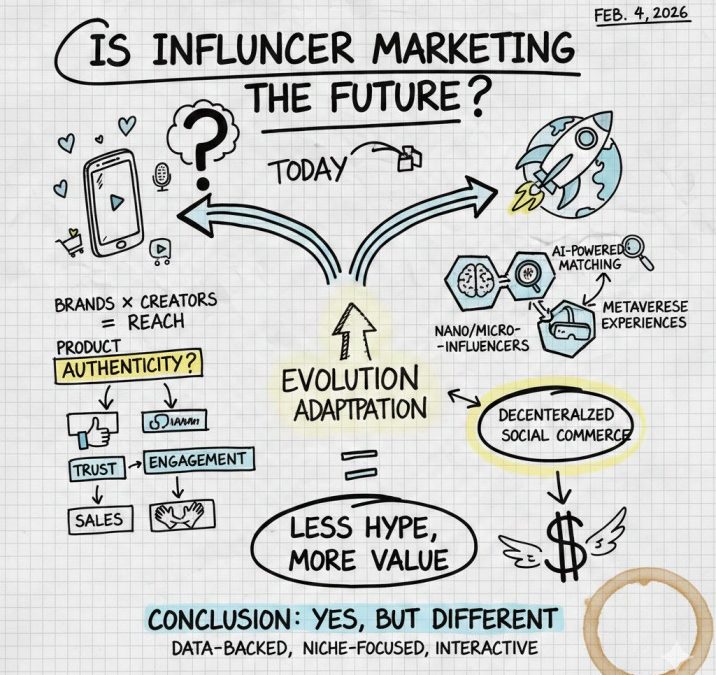
Is Influencer Marketing the Future?
Influencer marketing isn’t the future because creators are popular.
It’s the future because the internet rewired trust — and brands haven’t caught up yet.
What’s dying isn’t advertising.
What’s dying is anonymous persuasion.
Let’s break this down properly.
The Pain: Why Traditional Marketing Is Quietly Losing Power
Every founder feels this, even if they don’t say it out loud.
- CPMs keep rising
- Click-through rates keep falling
- Performance ads feel efficient… until they don’t
- Brand recall is weak
- Loyalty is fragile
The problem isn’t creative quality.
It’s credibility.
Consumers don’t trust brands by default anymore.
They trust people who look like them, talk like them, and use products in the real world.
This isn’t a Gen Z quirk.
It’s human behavior catching up with the internet.
The Reframe: Influencer Marketing Isn’t a Tactic. It’s a Distribution Shift.
Most brands still treat influencer marketing as a line item.
That’s the mistake.
Influencer marketing is actually a new distribution layer — one that sits between attention and action.
Think about it:
- Ads interrupt
- Creators integrate
- Brands talk at people
- Creators talk with people
This is why creator content outperforms polished brand ads on the same platforms.
Not because it’s cheaper.
Because it feels earned.
Why Influencer Marketing Is Structurally the Future
This isn’t about trends.
It’s about incentives.
1. Platforms Are Optimized for Humans, Not Logos
Algorithms don’t reward brands for being brands.
They reward watch time, retention, and relevance.
Creators win here naturally.
That’s why platforms like Instagram and TikTok keep pushing creator-led formats.
Not because they love creators.
Because creators keep users engaged.
2. Trust Is Now Portable
Trust used to belong to institutions.
Now it belongs to individuals.
A creator can:
- move platforms
- change formats
- build audiences faster than brands
- influence purchase decisions without discounts
That’s power brands don’t control — but can collaborate with.
The future belongs to brands that borrow trust intelligently instead of trying to manufacture it.
3. Content Velocity Beats Creative Perfection
Modern growth isn’t about one great ad.
It’s about many good pieces of content, tested, iterated, and distributed fast.
Creators are built for this.
They:
- understand hooks
- know what stops scrolls
- ship fast
- adapt daily
No internal brand team can match this velocity at scale.
The Shift Most Brands Haven’t Made Yet
Here’s where influencer marketing evolves.
The future is not mega influencers doing one-off posts.
The future is:
- nano + micro creators
- UGC-style content
- long-term creator benches
- performance-driven briefs
- reuse across paid, owned, and earned
In short: creators as infrastructure, not endorsements.
The brands winning tomorrow are already doing this today.
What Influencer Marketing Will Look Like in the Next 5 Years
Let’s be specific.
Influencer marketing will:
- Look more like product development
- creators test messaging
- feedback loops shape positioning
- Merge with performance marketing
- creator content fuels ads
- ads scale creator winners
- Become measurable beyond likes
- assisted conversions
- retention lift
- content-level ROI
- Move closer to commerce
- shoppable content
- affiliate-style payouts
- outcome-based pricing
This isn’t speculative.
It’s already happening — just unevenly.
The Real Question Founders Should Ask
Not “Is influencer marketing the future?”
But:
If trust drives growth, who does the customer trust today — us, or the people they follow?
If the answer isn’t “us,”
then influencer marketing isn’t optional.
It’s a bridge.
Final Take
Influencer marketing isn’t replacing marketing.
It’s becoming marketing.
Brands that adapt early will:
- lower acquisition costs
- build trust faster
- create defensible distribution
Brands that don’t will keep competing on price, discounts, and louder ads.
The future doesn’t belong to the loudest brand.
It belongs to the most believable one.
If you’re building for the next decade,
this isn’t a trend to watch.
It’s a system to build.