
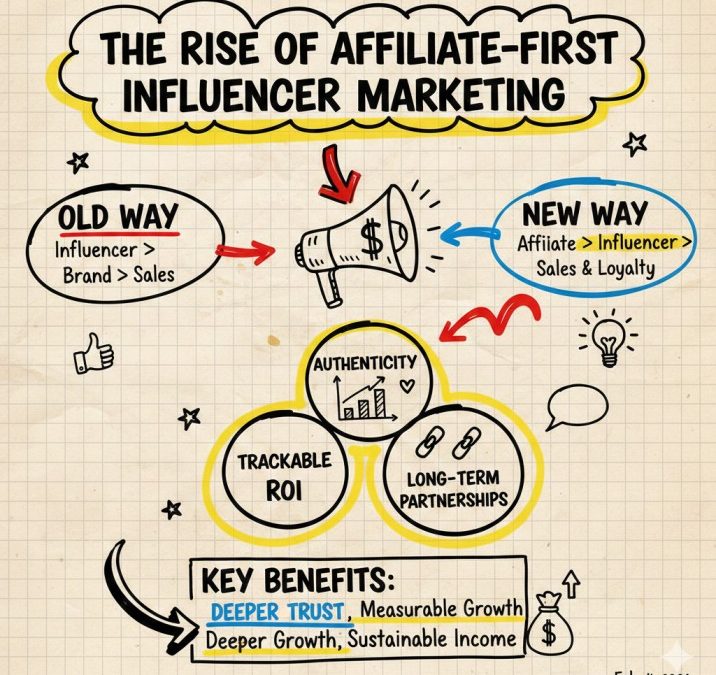
The Rise of Affiliate-First Influencer Marketing
For years, influencer marketing ran on a simple model:
pay upfront, hope it works, report likes.
That model is quietly dying.
What’s replacing it is sharper, fairer, and far more accountable:
affiliate-first influencer marketing.
Not because brands suddenly love revenue sharing —
but because they can’t afford uncertainty anymore.
The Old Model: Pay for Posts, Pray for ROI
Traditional influencer marketing was built for awareness, not outcomes.
Brands paid for:
- reach
- content delivery
- a fixed number of posts
Whether sales happened or not was often secondary.
This worked when:
- CAC was low
- competition was limited
- budgets were forgiving
None of that is true today.
Consumer brands — especially D2C, fintech, and travel — now operate under tight unit economics.
Every channel is expected to justify itself.
Flat-fee influencer deals struggle in that environment.
The Shift: From Endorsement to Outcome
Affiliate-first influencer marketing flips the incentive model.
Instead of asking:
“Did this post perform?”
Brands now ask:
“Did this creator drive action?”
Creators get paid when:
- users click
- sign up
- book
- purchase
Brands pay when value is created.
That alignment is the real reason this model is rising.
Why Affiliate-First Models Are Scaling Now
This isn’t a trend.
It’s a response to pressure.
1. Rising CAC Is Forcing Accountability
Paid ads are expensive.
Influencer retainers add fixed cost.
Affiliate models introduce:
- variable payouts
- predictable unit economics
- lower downside risk
For brands, this means:
- no paying for vanity
- no sunk cost anxiety
- cleaner ROI conversations
2. Creators Are Becoming Operators, Not Billboards
Modern creators don’t just post.
They:
- educate
- compare
- recommend
- follow up
Affiliate models reward creators who understand funnels, not just aesthetics.
This attracts a different class of creator —
one who thinks in conversion, not clout.
3. Trust Converts Better Than Reach
Audiences know when a creator is “doing a paid post.”
Affiliate-driven content feels different because:
- creators recommend selectively
- they repeat what works
- they optimise messaging over time
On platforms like Instagram and TikTok, repeated, authentic recommendations outperform one-off endorsements.
Trust compounds.
So do commissions.
Why Brands Prefer Affiliate-First Influencer Marketing
From a brand lens, the benefits are structural.
Affiliate-first models:
- reduce upfront spend
- tie payouts to revenue
- surface high-performing creators naturally
- make scaling safer
Instead of guessing which influencer will work,
brands let performance decide.
Creators who convert get more attention.
Creators who don’t fade out without drama.
That’s a healthier ecosystem for both sides.
Why Creators Are Opting In (Despite the Risk)
At first glance, affiliate models look risky for creators.
No guaranteed fee.
Performance pressure.
But strong creators prefer this model because:
- upside is uncapped
- income becomes recurring
- leverage grows with audience trust
A single high-performing piece of content can generate revenue for months.
That’s impossible in a one-time paid post.
Affiliate-first models reward:
- consistency
- credibility
- audience alignment
Not just follower count.
Where Affiliate-First Influencer Marketing Works Best
This model performs especially well in categories where:
- trust matters
- consideration cycles are longer
- repeat usage is common
Examples:
- travel bookings
- fintech apps
- SaaS tools
- marketplaces
- D2C products with repeat buys
In these categories, creators don’t just drive clicks.
They shape decisions.
The Common Mistake Brands Make
Many brands bolt affiliate links onto old influencer strategies.
That fails.
Affiliate-first influencer marketing requires:
- clear attribution
- simple payout logic
- creator-friendly dashboards
- fast payouts
Most importantly, it requires patience.
Affiliate growth compounds.
It rarely spikes on day one.
Brands that expect instant results miss the long tail.
What the Next Phase Looks Like
As this model matures, expect to see:
- hybrid deals (lower base + affiliate upside)
- creator cohorts competing on performance
- deeper creator education on funnels
- closer integration with content commerce
Influencer marketing is moving from:
media buying → revenue partnerships.
That’s the real evolution.
Final Take
Affiliate-first influencer marketing is rising because it solves a modern problem:
Brands want accountability.
Creators want ownership.
Audiences want honesty.
When incentives align, performance follows.
The future of influencer marketing won’t be about who gets paid to post.
It will be about who earns by converting trust into action.
That’s not a tactic shift.
It’s a mindset shift.