
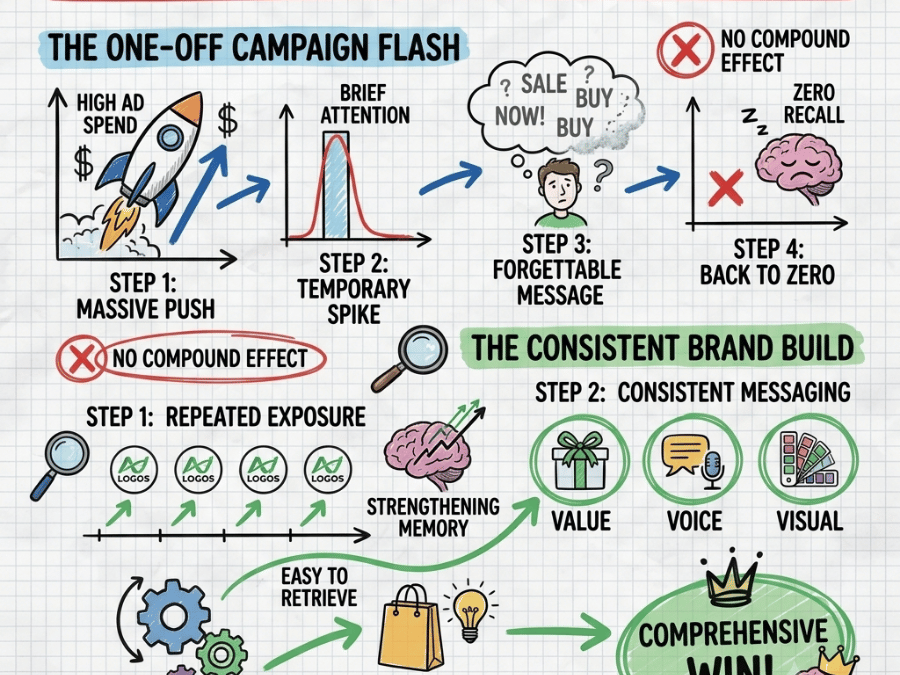
A brand runs one influencer campaign. It gets decent views. The comments look good. The team is happy. Three months later, nobody remembers the brand.
This is the most common story in influencer marketing in India, and it plays out across categories — beauty, food, tech, fashion, fitness. A one-off campaign generates noise. It does not build a brand.
How Brand Recall Actually Works
There is a foundational principle in advertising called the Rule of Seven – the idea that a consumer needs to encounter a brand message at least seven times before it moves from awareness to consideration.
A single post no matter how well-made is a flicker. The audience sees it, maybe engages, and immediately moves on to the next piece of content. The algorithm buries it within 48 hours. That creator’s next post replaces it in their followers’ memory.
Brand recall is not built in moments. It is built through repetition, context, and trust, all of which require sustained presence over time.
The Awareness Trap
Brands often confuse awareness with recall. They are not the same thing.
Awareness is when someone has heard of your brand. Recall is when your brand comes to mind unprompted at the moment of purchase, at the moment of recommendation, at the moment a problem arises that your product solves.
A one-off campaign can generate awareness. It almost never generates recall. And recall is what drives sales, referrals, and brand loyalty.
When a brand invests in a single campaign, they are paying for the top of the funnel and then abandoning the consumer halfway through their journey. The consumer saw your product on a creator’s page three months ago. They liked it. Then they forgot about it. Then they bought from a competitor who they had seen five more times since.
What One-Off Campaigns Actually Cost You
The problem with one-off campaigns is not just that they underperform. It is that they create a false sense of activity while delivering none of the long-term value that makes influencer marketing worth investing in.
- No compounding effect: each campaign starts from zero instead of building on the last one
- No creator relationship equity: working with a creator once means you never unlock their deep audience trust
- No algorithmic momentum: platforms favour accounts and content that show consistent patterns
- No narrative: brand storytelling requires chapters, not single sentences
Brands that run one-off campaigns are essentially paying for reach without retention. They are filling a leaky bucket and wondering why it keeps emptying.
The Compounding Power of Consistent Campaigns
The brands that win at influencer marketing in India and globally treat creators like long-term brand partners, not one-time vendors. They show up in the same creator’s content repeatedly. They become part of that creator’s world. And by extension, they become part of the audience’s world.
This is when influencer marketing starts to behave like brand building. The audience stops seeing sponsored content and starts associating the creator with the brand. The creator stops doing ads and starts doing endorsements. The brand stops buying reach and starts building equity.
What Brands Should Do Instead
Think in series, not in posts. Plan campaigns that tell a story across multiple touchpoints not necessarily with the same creator every time, but with a consistent message, consistent frequency, and consistent intent.
- Work with 3 to 5 creators on a recurring basis rather than 20 creators once
- Build a content calendar that maps influencer activity across quarters, not just for the next product launch
- Give creators a narrative arc to work with not just a product feature to mention
- Get content usage rights from the creator so that it can reach similar audiences multiple times
- Measure not just post-campaign spikes but sustained search volume, social mentions, and brand sentiment over time
One campaign is a conversation starter. It should never be the whole conversation.